
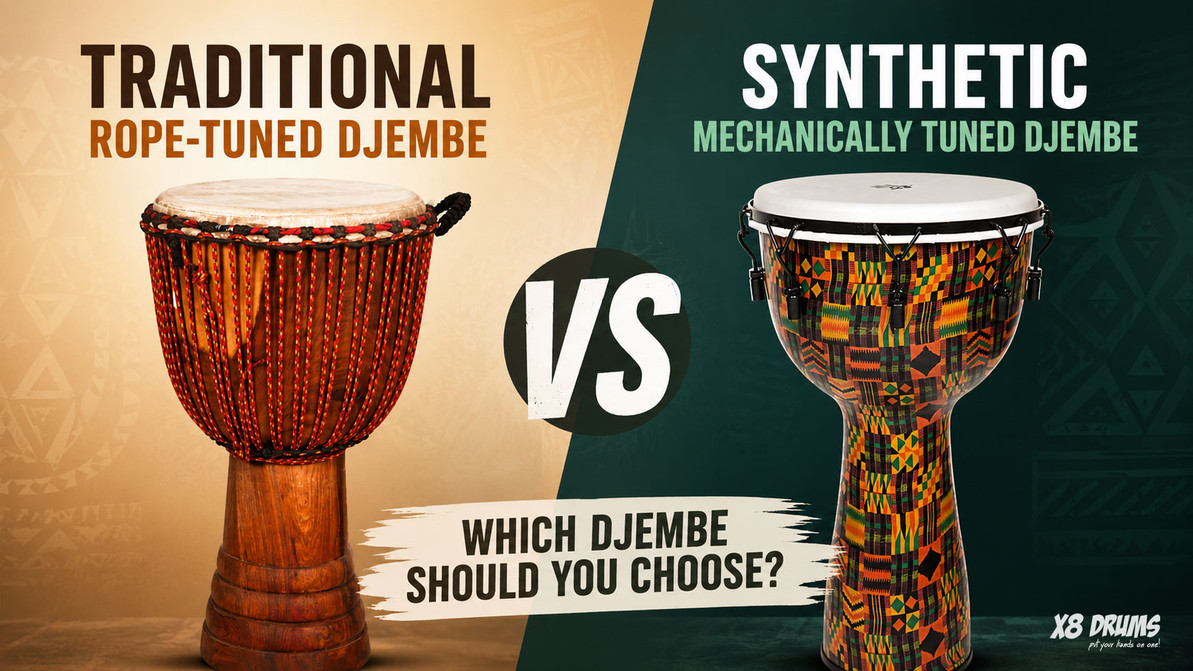
Traditional vs Synthetic Djembe: Which Drum Should You Choose?
With so many beautiful djembes available, choosing your first drum can feel overwhelming. One of the biggest decisions is whether to buy a traditional rope-tuned djembe or a synthetic mechanically tuned djembe.
Both styles offer excellent sound and playability, but they differ in durability, maintenance, tuning, and overall feel. Understanding these differences can help you choose the right drum for your home, classroom, drum circle, or performance needs.
What Is a Traditional Rope-Tuned Djembe?
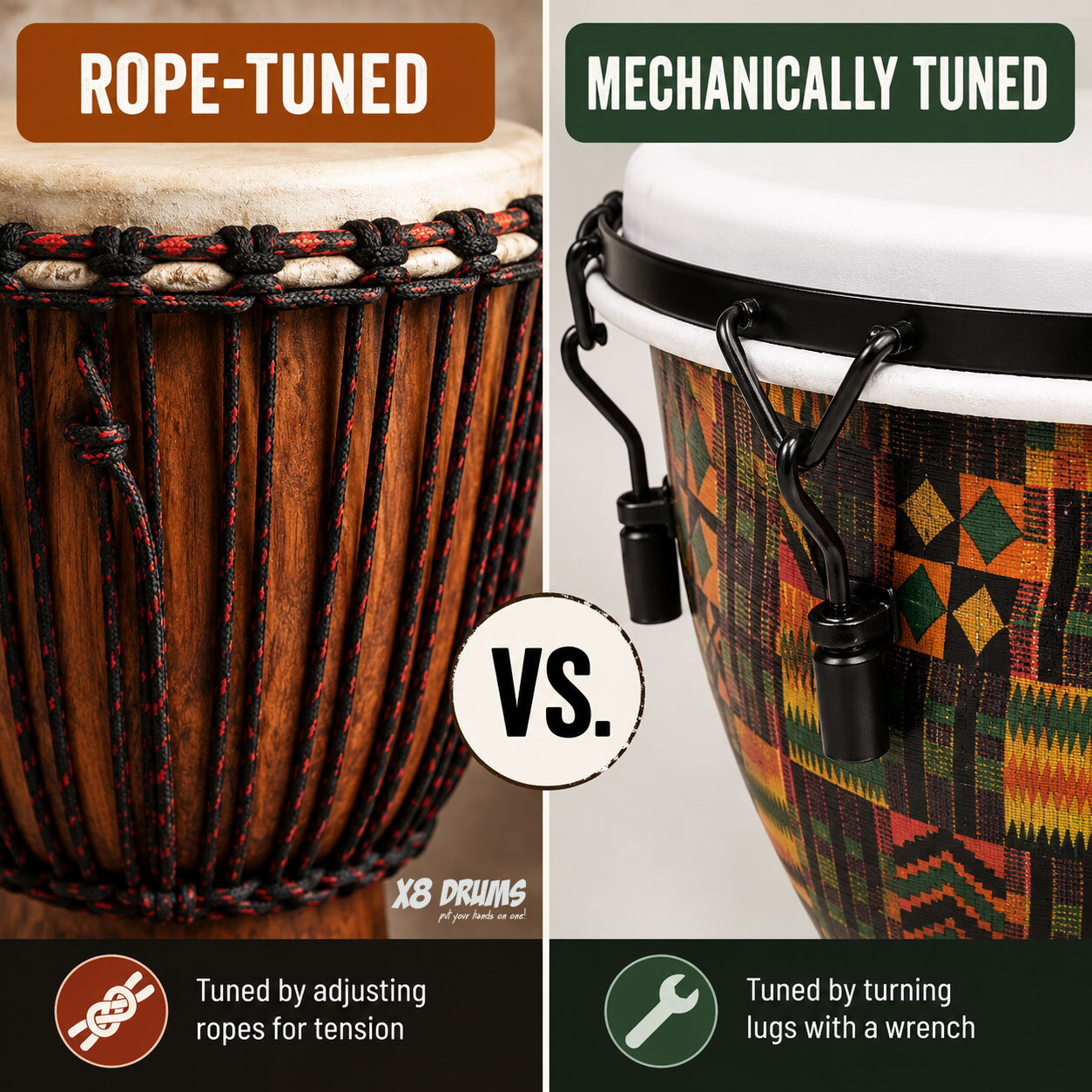
Traditional djembes are handcrafted drums that follow centuries-old West African design traditions. They typically feature a wooden shell, a natural goat skin drumhead, and a rope tuning system.
The drumhead is tightened using a series of vertical ropes and tuning knots that create the classic crisp, resonant djembe sound loved by players around the world.
Benefits of Traditional Djembes
Traditional djembes are prized for their rich, warm tone and handcrafted beauty. Every traditional djembe has its own unique character, making these drums especially appealing to performers, drum circle facilitators, recording musicians, and players who want an authentic sound and feel.
- Warm, organic tone
- Handcrafted wooden shell
- Traditional rope tuning system
- Natural goat skin drumhead
- Great dynamic range for expressive playing
Things to Consider
Natural goat skin heads require more care than synthetic heads. While they sound incredible, they can be damaged by drumsticks, hard toys, sharp edges, rough classroom use, or major humidity changes.
If the head tears, replacing it can take several hours and often requires specialized knowledge. Professional re-heading services are available, but the cost can sometimes approach the value of the drum itself.
Looking for an Authentic Traditional Djembe?
Explore handcrafted rope-tuned djembes with natural tone, beautiful wood shells, and traditional construction.
What Is a Synthetic Mechanically Tuned Djembe?
Mechanically tuned djembes — sometimes called key-tuned djembes — use modern materials and hardware for added durability and convenience.
These drums typically feature a synthetic drumhead, a fiberglass or PVC shell, and metal tuning lugs that can be adjusted with a wrench.
Benefits of Synthetic Djembes
Synthetic mechanically tuned djembes offer several practical advantages. They are durable, easy to tune, weather-resistant, and consistent from one playing session to the next.
- Highly durable synthetic drumheads
- Easy tuning with standard hardware
- Excellent weather resistance
- Consistent sound quality
- Minimal maintenance
Synthetic heads can withstand years of heavy use, including energetic classroom environments and outdoor events. If a head ever needs replacement, it can usually be changed quickly with basic tools.
Best Uses for Synthetic Djembes
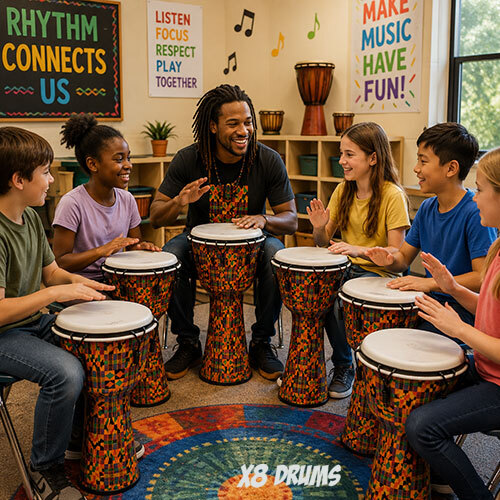
Synthetic djembes are especially popular in schools, community music programs, drum therapy groups, family programs, and beginner settings because they are easy to care for and built to handle frequent use.
Need a Durable Djembe for Kids or Classrooms?
Synthetic key-tuned djembes are easy to maintain, simple to tune, and ready for years of group drumming.
Traditional vs Synthetic Djembe Comparison
| Feature | Traditional Djembe | Synthetic Djembe |
|---|---|---|
| Drum Head | Natural goat skin | Synthetic drumhead |
| Tuning | Rope-tuned | Mechanical / lug-tuned |
| Durability | Moderate | Excellent |
| Maintenance | Higher | Low |
| Weather Resistance | Sensitive to humidity and weather | Highly weather-resistant |
| Sound | Warm, organic, and traditional | Bright, consistent, and reliable |
| Best For | Performers, enthusiasts, and traditional players | Schools, beginners, families, and outdoor use |
Traditional vs Synthetic Djembe: Which Is Right for You?
The best djembe depends on how and where you plan to use it.
Choose a Traditional Rope-Tuned Djembe If You Want:
- Authentic West African sound and feel
- A handcrafted wooden instrument
- Warm, nuanced tones
- A drum for performance or serious study
Choose a Synthetic Mechanically Tuned Djembe If You Want:
- Maximum durability
- Easy tuning and maintenance
- A drum for classrooms or children
- Reliable performance indoors or outdoors
Both types of djembes can be excellent instruments. Whether you choose a traditional rope-tuned drum or a modern synthetic djembe, the most important thing is finding a drum that inspires you to play.
Ready to Find Your Djembe?
Browse traditional and synthetic djembes to find the right sound, style, and durability for your needs.
Frequently Asked Questions
Are synthetic djembes good?
Yes. Modern synthetic djembes are durable, weather-resistant, and easy to tune. They are especially useful for schools, beginners, outdoor events, and group drumming programs.
Do traditional djembes sound better?
Many players prefer the warm, organic tone of a traditional goat skin djembe. Traditional djembes are often favored by performers and serious players who want a more authentic feel.
Which djembe is best for classrooms?
A synthetic mechanically tuned djembe is usually the best choice for classrooms because it is durable, low-maintenance, and can handle frequent use by children and groups.
What is the difference between rope-tuned and key-tuned djembes?
Rope-tuned djembes use a traditional rope system to adjust drumhead tension. Key-tuned djembes use metal lugs that can be tightened with a wrench, making tuning faster and easier for many beginners.
Continue the X8 Drums Djembe Buying Guide
Want to learn more before choosing your drum? Explore the rest of our djembe buying guide below.
Recent Posts
-

Win Free Drum Shop Credit
Weekly X8 Drums Giveaway Win Free Drum Shop Credit Join the X8 Drums email list for drumming tip …25th Jul 2026 -

What's Your Zodiac Drum? The Perfect Percussion Instrument for Every Sign
Every drum has a personality. Some instruments lead the circle with a bold voice, some hold the gro …22nd Jun 2026 -
How to Choose Your First Djembe: A Beginner's Guide to Size, Sound & Materials
The djembe is one of the most powerful, expressive, and approachable hand drums in the world. It ca …5th Jun 2026