
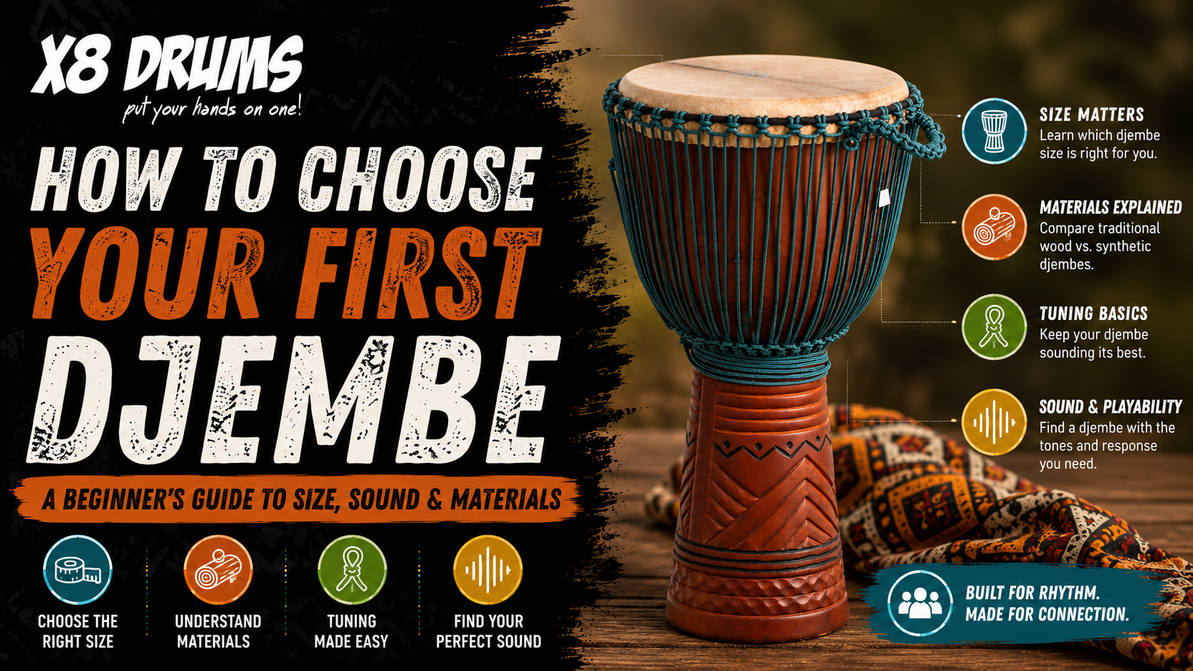
How to Choose Your First Djembe: A Beginner's Guide to Size, Sound & Materials
The djembe is one of the most powerful, expressive, and approachable hand drums in the world. It can produce deep bass, crisp tones, sharp slaps, and a wide range of accents from a single playing surface.
Whether you are joining a drum circle, taking your first West African drumming class, playing in a worship team, adding hand percussion to a band, or shopping for your first serious drum, this guide will help you understand what makes a djembe unique and what to look for before you buy.
What Is a Djembe?
A djembe is a goblet-shaped hand drum with a wide bowl, narrow stem, and drumhead traditionally made from goatskin. It is played with the hands and is known for producing a surprisingly large range of sounds from one drum.
The djembe is closely associated with West African music and dance traditions. It has long been used to support dancers, lead rhythms, communicate musical cues, and bring people together during community events, celebrations, ceremonies, and rites of passage.
Today, djembes are played all over the world in drum circles, schools, therapy programs, churches, recording studios, acoustic groups, and professional percussion setups.
Why the Djembe Is So Popular
The djembe has a rare combination of power and accessibility. A beginner can learn simple rhythms quickly, but an advanced player can spend a lifetime developing tone, speed, control, musical vocabulary, and traditional rhythm knowledge.
Easy to Start
You do not need sticks, pedals, or a large setup. Sit comfortably, place the drum between your knees, and begin learning the basic hand positions.
Big Sound
A well-made djembe can produce deep bass notes, open tones, and cutting slaps that carry clearly in a group.
Great for Groups
Djembes are common in drum circles, classrooms, wellness programs, and community music because they are social and interactive.
Portable
Compared with a drum set or large congas, a djembe is easy to transport to lessons, rehearsals, circles, and performances.
A Brief History of the Djembe
The djembe comes from West Africa and is deeply connected to the musical traditions of the Mande people. It is commonly associated with countries such as Guinea, Mali, Burkina Faso, Ivory Coast, and surrounding regions.
Traditionally, djembes were carved from a single piece of hardwood and headed with animal skin. In many traditions, the making of the drum carried spiritual meaning. The wood, the animal skin, and the craft of the drum maker were all considered part of the instrument's identity.
The djembe became more widely known outside West Africa during the twentieth century as African dance companies, touring musicians, teachers, researchers, and recording artists introduced more audiences to West African drumming. By the 1980s and 1990s, the djembe had become especially popular in world music, schools, drum circles, and percussion programs.
Understanding the Djembe's Shape and Sound
The djembe has a distinctive goblet shape for a reason. The wide bowl helps develop the bass tone, while the narrow stem projects and amplifies the sound. The proportions of the shell, the thickness of the wood, the shape of the interior, the head material, and the tuning tension all affect the final tone.
A standard adult djembe is usually around 24-25 inches tall with a drumhead around 12-14 inches in diameter. Smaller drums can be useful for children, travel, or casual playing, but many instructors prefer students to learn on a full-size drum because it is easier to produce proper bass, tone, and slap sounds.
| Djembe Size | Best For | What to Know |
|---|---|---|
| 8-10 inch head | Kids, travel, decoration, light casual playing | Portable, but usually limited in bass and projection. |
| 10-12 inch head | Small adults, beginners, casual circles | Easier to carry, but may not have the full sound of a standard djembe. |
| 12-14 inch head | Most adult beginners, classes, drum circles, performers | The most common range for learning proper technique and getting a full sound. |
| 14+ inch head | Experienced players, deep bass, specialty use | Can sound huge, but may be heavier and less comfortable for some players. |
Ready to Choose Your First Djembe?
Start with a drum that fits your body, your playing goals, and the sound you want. X8 Drums carries djembes for beginners, students, drum circles, facilitators, and working percussionists.
The Three Basic Djembe Sounds
Before buying a djembe, it helps to understand the three core sounds players use most often: bass, tone, and slap. A good drum should let you hear a clear difference between each one.
Bass
The bass note is played near the center of the drumhead with a relaxed hand. It should sound deep, round, and full.
Tone
The open tone is played closer to the edge with the fingers together. It should sound clean, open, and resonant.
Slap
The slap is a sharper, higher-pitched sound played near the edge. It should cut through without sounding thin or harsh.
Muted Notes
Muted strokes, ghost notes, and accents help create groove, movement, and musical expression between the main notes.
Watch: Introduction to the Djembe and the Three Basic Notes
This video is a helpful starting point for hearing the basic djembe sounds and understanding how the drum is played.
Traditional Wood Djembes vs. Modern Djembes
One of the biggest choices when buying a djembe is whether you want a traditional rope-tuned wood drum or a modern drum made with synthetic materials and mechanical tuning.
Traditional Wood Djembes
Traditional djembes are typically carved from hardwood and tuned with rope. They often use natural skin heads, most commonly goatskin. Players choose them for their warmth, character, projection, cultural connection, and classic West African sound.
Modern Synthetic Djembes
Modern djembes may use synthetic shells, synthetic heads, mechanical tuning systems, or weather-resistant materials. These drums are popular with schools, outdoor players, facilitators, traveling musicians, and beginners who want durability and easier maintenance.
| Type | Strengths | Best For |
|---|---|---|
| Traditional rope-tuned wood djembe | Warm tone, strong bass, authentic feel, rich character | Students of West African drumming, drum circles, serious beginners, performers |
| Mechanically tuned djembe | Easier tuning, consistent tension, familiar hardware | Beginners, schools, players who want quick adjustments |
| Synthetic shell djembe | Durable, weather-resistant, often lighter | Outdoor use, classrooms, travel, wellness programs |
| Synthetic head djembe | Stable tuning, less affected by humidity | Players in changing climates or high-use environments |
What Materials Matter Most?
The materials used in a djembe have a major impact on sound, feel, weight, durability, and price.
Shell Material
Traditional djembes are carved from a single piece of hardwood. Dense, mature hardwoods can allow the shell to be carved thinner while still remaining strong, which often improves resonance. Softer or lower-quality woods may produce less projection and less tonal separation.
Modern djembes may use fiberglass, plastic, Acousticon-style materials, or other composites. These materials are often selected for durability, consistency, and weather resistance.
Drumhead Material
Natural goatskin is the classic djembe head material. It produces a warm, responsive sound with strong slap potential. Synthetic heads are more stable in changing weather and are often easier for schools and outdoor programs to manage.
Tuning System
Rope tuning is traditional and gives the drum its classic look and feel. Mechanical tuning uses bolts or lugs, similar to other modern drums, making adjustments more familiar for some players.
How to Choose the Right Djembe for Your Needs
The best djembe for you depends on where you will play, how often you will move the drum, what kind of sound you want, and how much maintenance you are comfortable with.
For Beginners
Choose a comfortable full-size drum with clear bass, tone, and slap sounds. Avoid tiny souvenir drums if you want to learn proper technique.
For Drum Circles
Look for a drum with enough projection to be heard in a group and a comfortable size for longer playing sessions.
For Classes
Ask your instructor what size they recommend. Many teachers prefer a 12-14 inch head for adult students.
For Outdoor Playing
Consider a synthetic or weather-resistant djembe if humidity, heat, and travel are part of your routine.
Watch: How to Tune Your Djembe
Tuning affects tone, projection, slap response, and overall playability. This video explains the basics of tuning a djembe so it sounds and feels better under your hands.
How Tight Should a Djembe Be?
A djembe should be tight enough to produce a clear open tone and crisp slap, but not so tight that the drum sounds choked or uncomfortable to play. If the head is too loose, the bass may be muddy and the slap may be weak. If it is too tight, the drum may lose warmth and become harsh.
Natural skin heads can change with temperature and humidity, so tuning may need occasional adjustment. Synthetic heads are usually more stable, which can be helpful for schools, facilitators, and outdoor players.
Common Beginner Buying Mistakes
- Buying a drum that is too small. Small djembes are portable, but they often lack the bass and tonal range needed for proper learning.
- Choosing looks over sound. Carvings and decoration are nice, but tone, comfort, and construction matter more.
- Ignoring weight. A heavy drum may sound great but can be difficult to carry to classes or circles.
- Buying a drum with poor tonal separation. Bass, tone, and slap should sound noticeably different.
- Forgetting accessories. A bag, stand, strap, or tuning tool can make ownership much easier.
Build a Complete Djembe Setup
A great drum is only part of the setup. Add a padded bag, tuning tools, straps, stands, or replacement heads to protect your drum and make playing more comfortable.
Djembe in Modern Music and Wellness
The djembe is still rooted in West African tradition, but it has also found a place in many modern settings. You will hear djembes in world music, acoustic performances, worship music, classroom percussion, recording sessions, community drum circles, and wellness programs.
Many people are drawn to the djembe because it feels communal. It is loud enough to lead, warm enough to support, and simple enough for beginners to join in. That combination makes it one of the most welcoming drums for group music-making.
Djembe Care and Maintenance
A well-cared-for djembe can last for years. The most important thing is to protect the head and shell from extreme conditions.
- Store the drum in a dry, temperature-stable place.
- Avoid leaving it in a hot car or damp room.
- Use a padded djembe bag when transporting it.
- Keep natural skin heads away from excessive moisture.
- Check rope tension or hardware periodically.
- Do not place heavy objects on top of the drumhead.
If your djembe has a natural skin head, expect the sound to change slightly with weather. That is normal. Learning basic tuning and care will help keep the drum sounding its best.
Frequently Asked Questions
What size djembe should a beginner buy?
Most adult beginners should look for a djembe with a 12-14 inch head. This size range usually gives enough playing surface, bass response, and tonal separation for proper learning.
Is a rope-tuned or mechanically tuned djembe better?
Neither is automatically better. Rope-tuned djembes offer a traditional feel and sound, while mechanically tuned djembes are often easier to adjust. The right choice depends on your goals, maintenance comfort, and playing environment.
Are synthetic djembes good?
Yes. Synthetic djembes can be excellent for outdoor playing, schools, travel, and high-use environments. Traditional wood djembes are often preferred by players who want a warmer, more traditional sound.
Can I use a small djembe for lessons?
Sometimes, but a very small djembe may make it harder to learn proper bass, tone, and slap technique. Check with your instructor before choosing a travel-size or child-size drum.
How do I know if a djembe sounds good?
Listen for three distinct sounds: a deep bass, a clear open tone, and a sharp slap. The drum should feel comfortable to play and should not buzz, rattle, or sound overly dull.
Final Thoughts: Start with the Drum That Inspires You to Play
The djembe is more than a beginner-friendly hand drum. It is a powerful, expressive instrument with deep cultural roots and a strong place in modern music, education, community, and wellness.
When choosing your first djembe, focus on size, sound, comfort, durability, and how you plan to use it. A good drum should make you want to practice, join the circle, take the class, and keep exploring rhythm.
Find Your Djembe
Explore djembes for beginners, drum circles, students, facilitators, and performers. Choose the drum that fits your sound, your setting, and your rhythm journey.
Continue Learning About Djembe Drums
Use these resources to keep learning, compare options, and build a better djembe setup.
Recent Posts
-

Win Free Drum Shop Credit
Weekly X8 Drums Giveaway Win Free Drum Shop Credit Join the X8 Drums email list for drumming tip …25th Jul 2026 -

What's Your Zodiac Drum? The Perfect Percussion Instrument for Every Sign
Every drum has a personality. Some instruments lead the circle with a bold voice, some hold the gro …22nd Jun 2026 -
How to Choose Your First Djembe: A Beginner's Guide to Size, Sound & Materials
The djembe is one of the most powerful, expressive, and approachable hand drums in the world. It ca …5th Jun 2026