
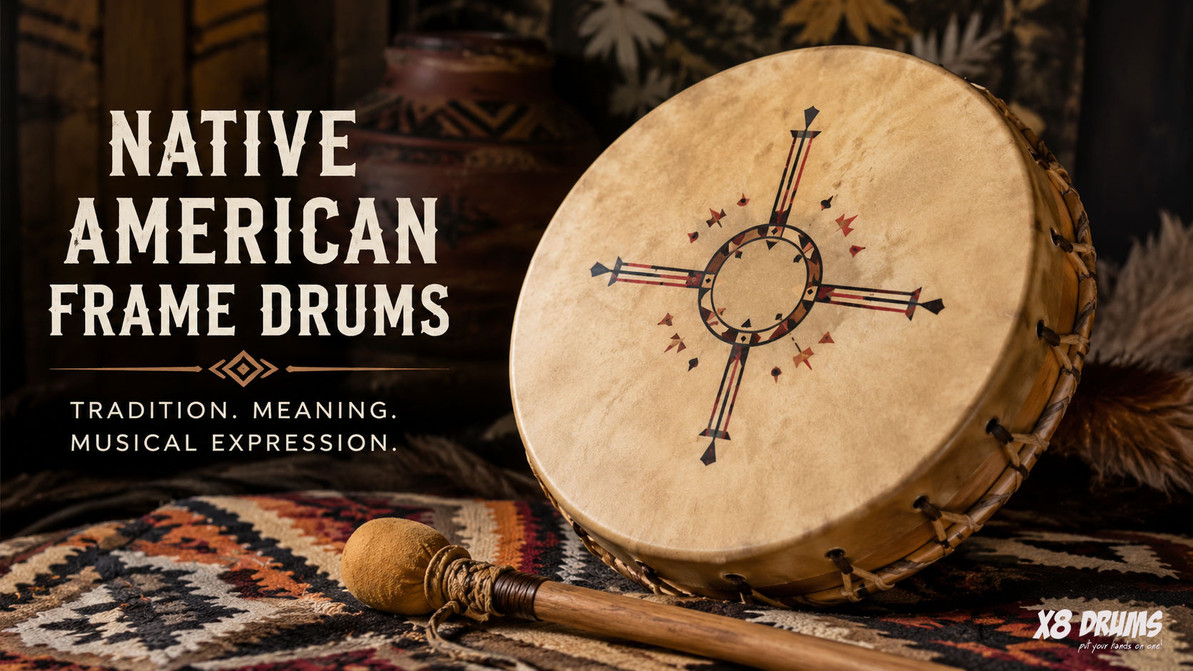
Native American Frame Drumming: Tradition, Meaning, and Musical Expression
Frame drums are among the oldest and most meaningful percussion instruments in the world. In many Native American and First Nations communities, hand drums and larger communal drums are more than musical tools. They are connected to song, ceremony, story, prayer, healing, identity, and community gathering.
Because of that, Native American frame drumming deserves to be approached with respect. There is no single universal “Native American drum tradition.” Different tribal nations, families, singers, makers, and regions carry their own teachings, songs, and protocols. For beginners, the best place to start is with listening, humility, and appreciation for the living cultures behind the instrument.
A respectful note for beginners: It is fine to appreciate the sound and craftsmanship of a frame drum. It is also important not to copy sacred songs, ceremonies, designs, or tribal meanings unless they have been shared with you by the people who carry those traditions. Keep your playing personal, educational, and respectful.
Why the Drum Is Often Called a Heartbeat
Many people describe Native American drumming as the heartbeat of the people or the earth. Musically, that image makes sense. A steady drum pulse gathers voices together, supports dancers, and gives a song a living center.
In powwow settings, large drums may be played by multiple singers at once. In more personal settings, a hand drum may support a single voice, a small group, or a quiet moment of reflection. The drum can mark celebration, memory, mourning, resilience, prayer, and belonging.
What Is a Frame Drum?
A frame drum has a simple design: a circular frame with a drumhead stretched across it. Compared with deeper drums like djembes, congas, or doumbeks, frame drums usually have a shallower body and a more focused tone.
Many Native American-style hand drums are played with a beater rather than the bare hand. The beater helps produce a warm, steady pulse and allows the head to resonate naturally. Depending on the size, head material, and tension, the sound can range from bright and focused to deep and earthy.
Materials, Size, and Sound
Traditional frame drums may use a wooden hoop and natural hide head. The exact materials vary by maker, region, and tradition. Natural hide heads are especially responsive to weather. A drum may sound lower and looser in humid conditions, then tighter and brighter in dry air.
Size also matters. Smaller drums are easier to hold and carry, while larger drums usually produce a deeper voice. A 12-inch frame drum is a practical starting size because it is portable, comfortable for beginners, and still large enough to create a satisfying tone.
Beginner tip: Choose a frame drum that feels comfortable to hold before chasing the deepest possible sound. A drum that is easy to play will help you build better timing, control, and consistency.
Decoration and Symbolism
Some frame drums are plain. Others are painted, wrapped, or decorated with personal or cultural imagery. Designs may include animals, natural forms, geometric patterns, colors, or symbols connected to specific teachings.
This is one area where beginners should be thoughtful. A design that looks beautiful may also carry cultural or spiritual meaning. If you decorate your own drum, consider using personal patterns, natural colors, or simple artwork that reflects your own life and musical purpose rather than borrowing sacred or tribally specific imagery.
How to Begin Playing a Frame Drum
Start by holding the drum comfortably so the head can resonate. If the back of the drum is pressed tightly against your body, the sound may become muted. Use a relaxed grip on the beater and let it rebound naturally instead of forcing each stroke into the head.
A few simple playing ideas can help you get started:
- Center stroke: Produces a fuller, deeper sound.
- Edge stroke: Creates a lighter tone and can be used for accents.
- Soft dynamics: Often sound better than heavy striking, especially on smaller drums.
- Steady pulse: Helps develop timing and gives the drum a grounded feel.
Video Examples
These video examples give readers a better sense of frame drum sound, hand drum playing, and Native American drumming context.
Caring for a Natural Hide Frame Drum
Natural hide frame drums should be stored with care. Keep the drum away from extreme heat, direct sunlight, and damp storage areas. If the head loosens in humid weather, gentle warmth can help restore tension, but avoid harsh heat sources that could damage the hide or wooden frame.
It is also helpful to let the drum adjust when moving between different environments. A drum that has been in a cold car, humid room, or very dry space may need time before it sounds its best.
Choosing Your First Frame Drum
For beginners, classrooms, meditation, sound exploration, and simple rhythm practice, a pretuned frame drum is often the easiest place to start. It gives you a playable drum without needing to learn tuning or lacing adjustments right away.
Find the Right Frame Drum
Explore warm, natural tones with a beginner-friendly frame drum or browse the full X8 Drums collection to compare sizes, styles, and sounds.
Final Thought
Native American frame drumming is not just about rhythm. It is connected to living cultures, community, memory, and meaning. For anyone new to the instrument, the best approach is to listen first, learn respectfully, and choose a drum that helps you build a thoughtful relationship with sound.
Recent Posts
-

Win Free Drum Shop Credit
Weekly X8 Drums Giveaway Win Free Drum Shop Credit Join the X8 Drums email list for drumming tip …25th Jul 2026 -

What's Your Zodiac Drum? The Perfect Percussion Instrument for Every Sign
Every drum has a personality. Some instruments lead the circle with a bold voice, some hold the gro …22nd Jun 2026 -

How to Choose Your First Djembe: A Beginner's Guide to Size, Sound & Materials
The djembe is one of the most powerful, expressive, and approachable hand drums in the world. It ca …5th Jun 2026